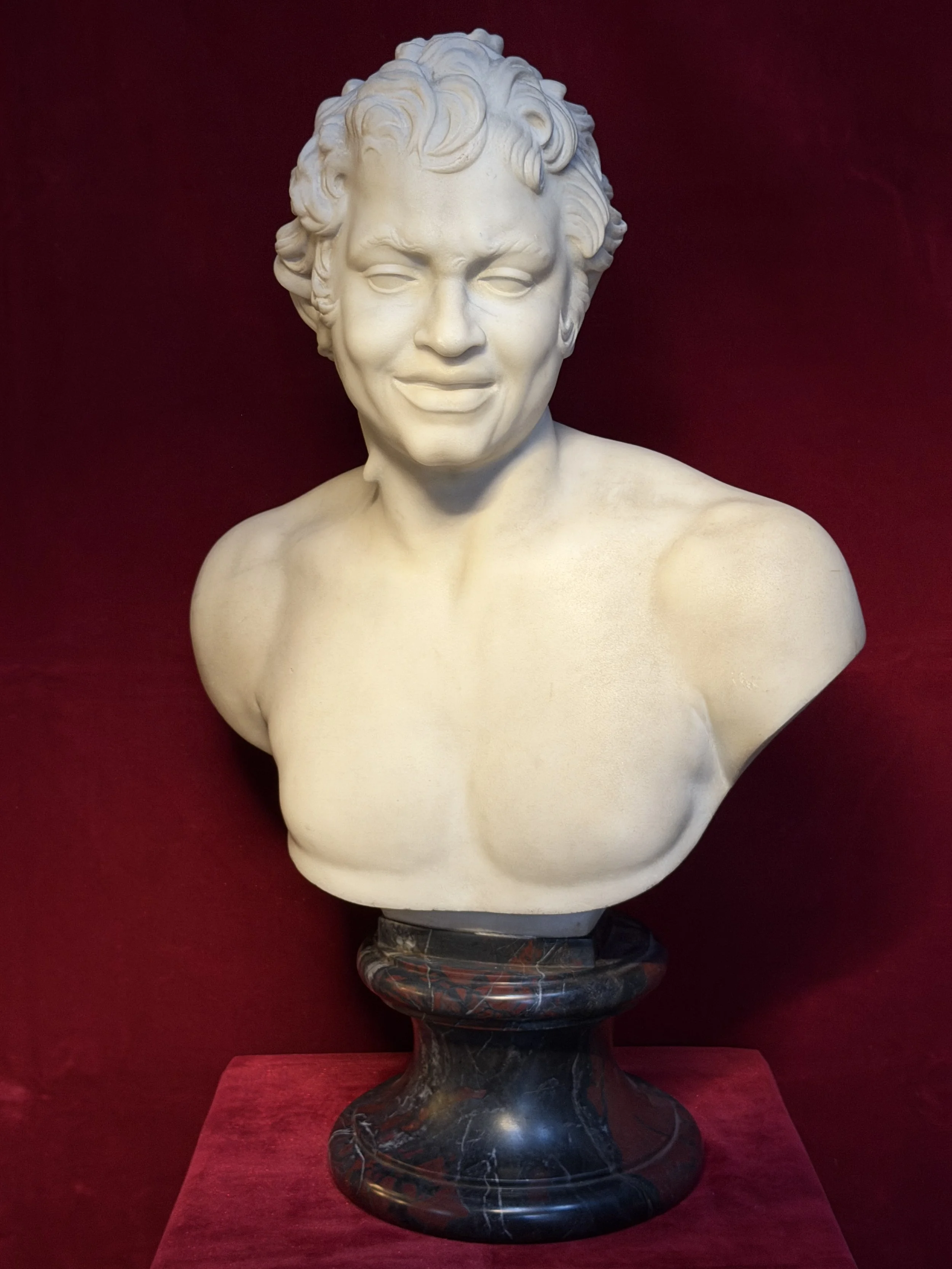
19th Century Italian Marble Bust of the Albani Faun

£4,975.00

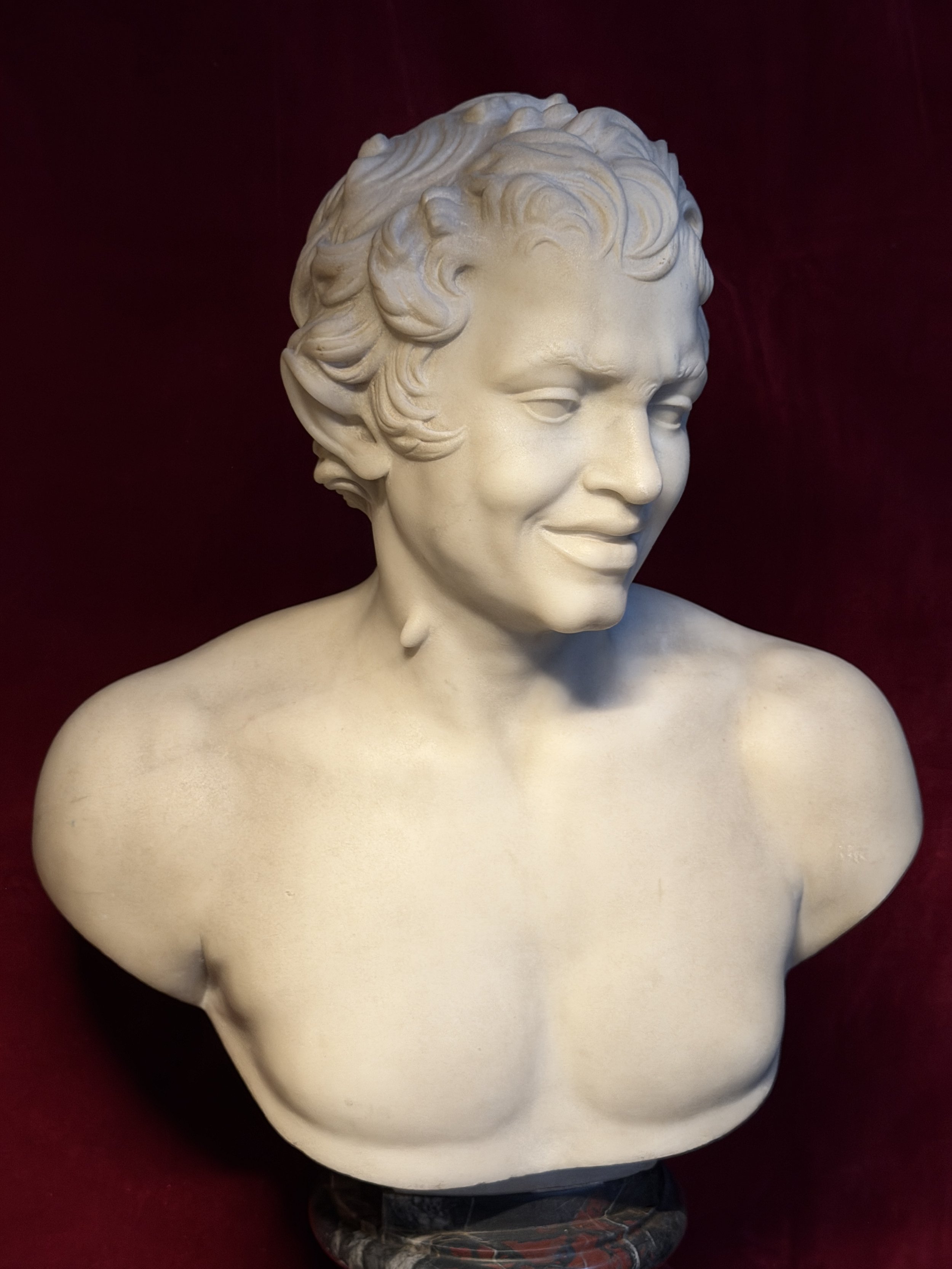
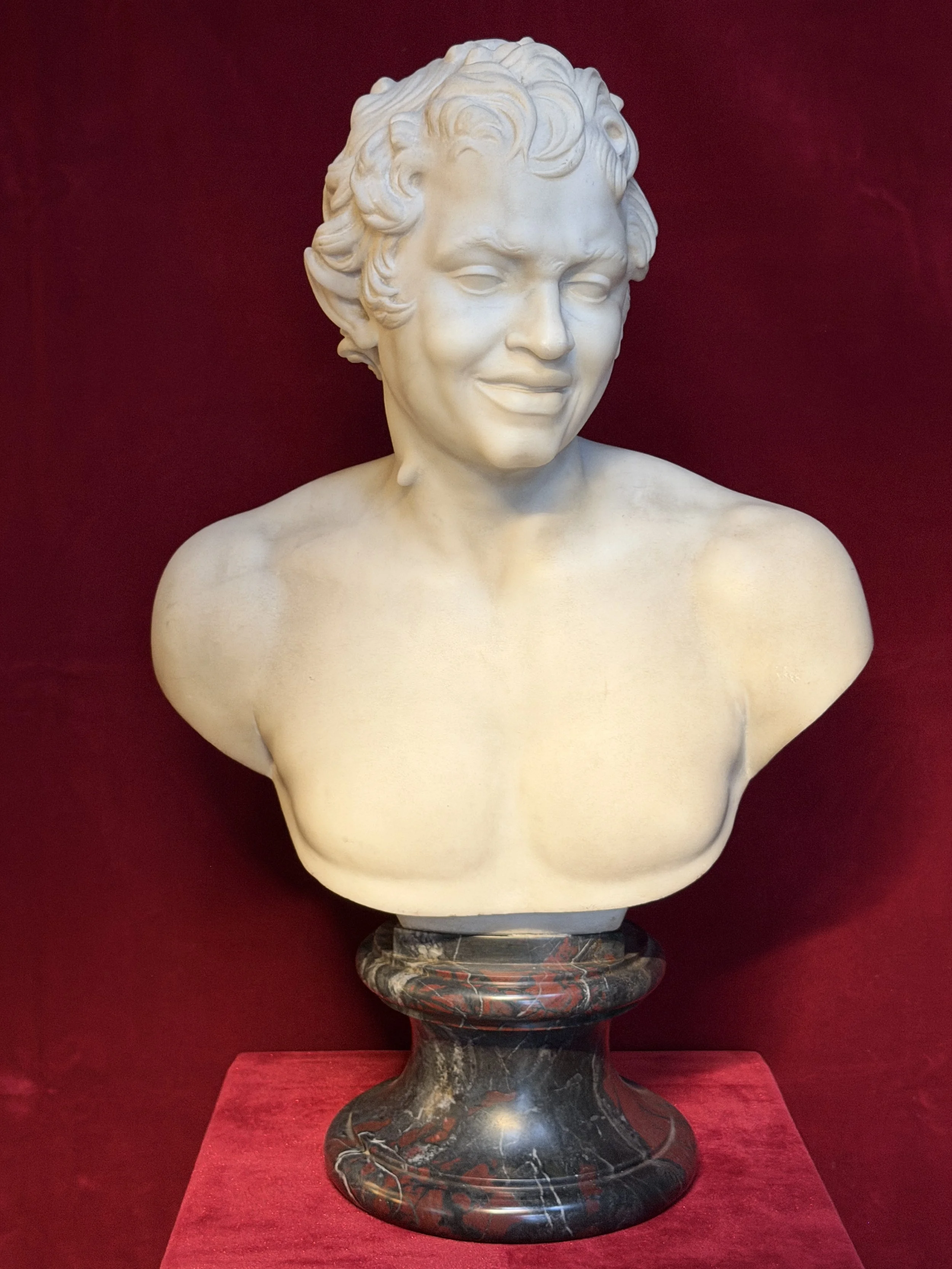
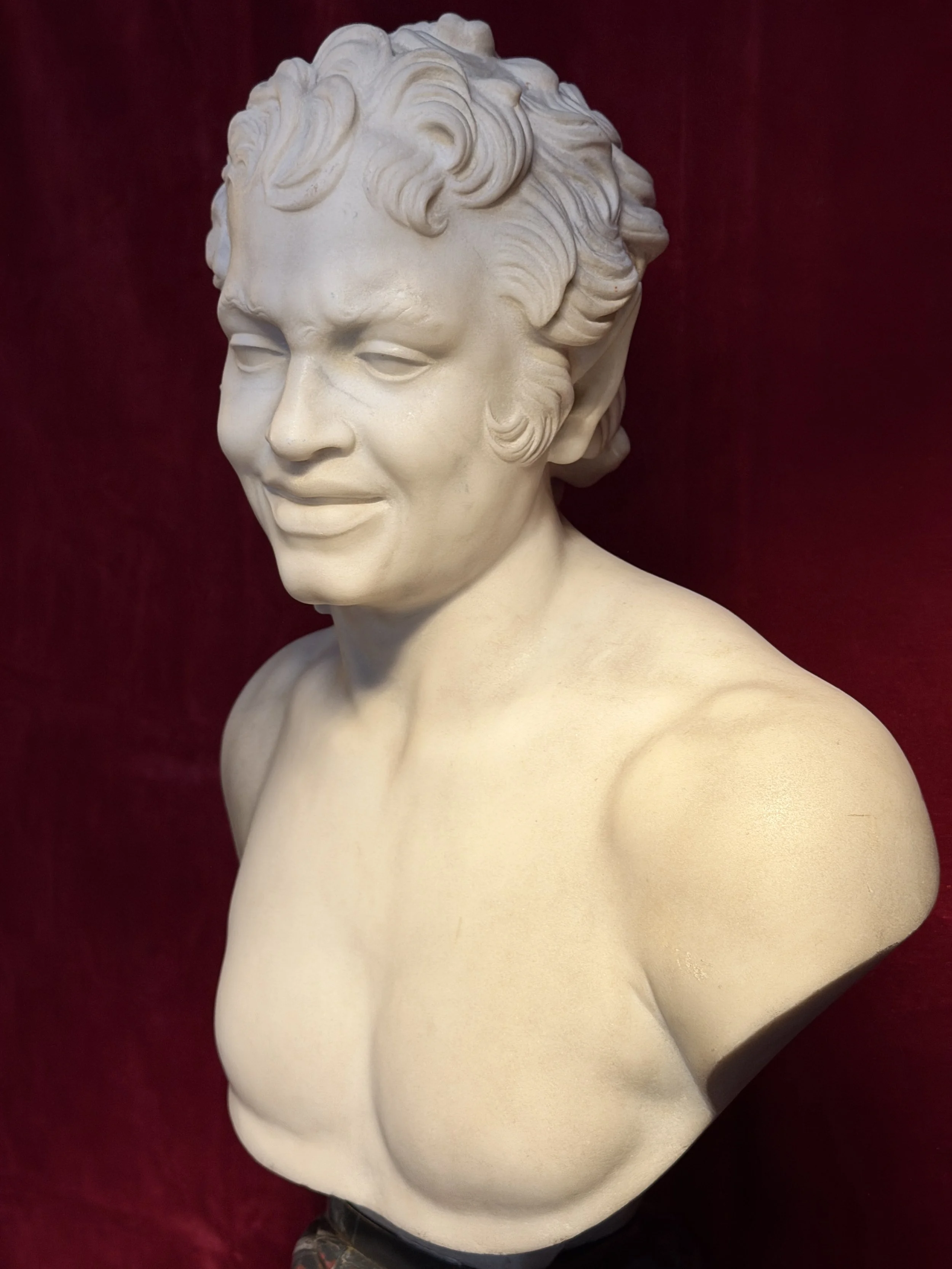
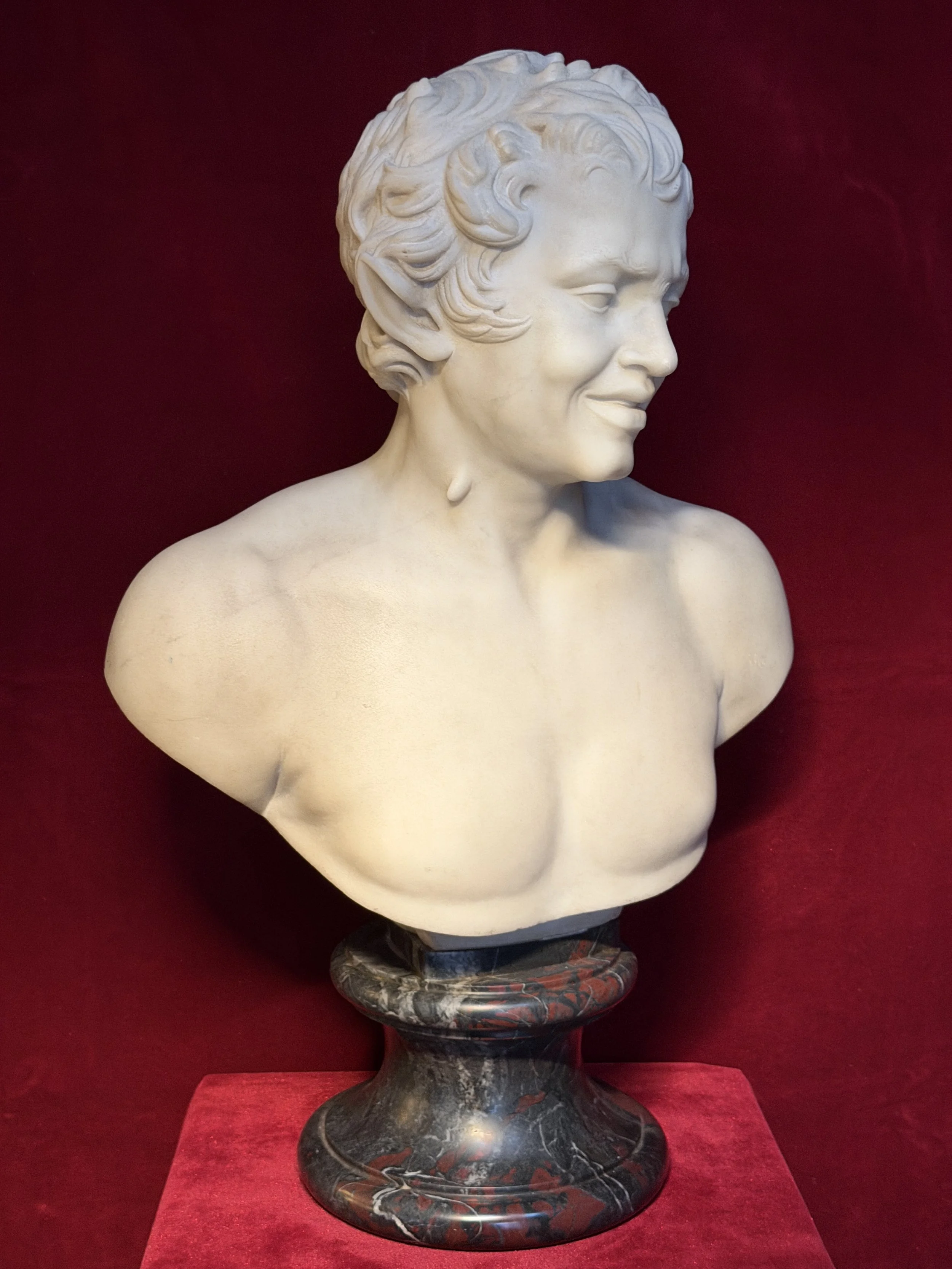
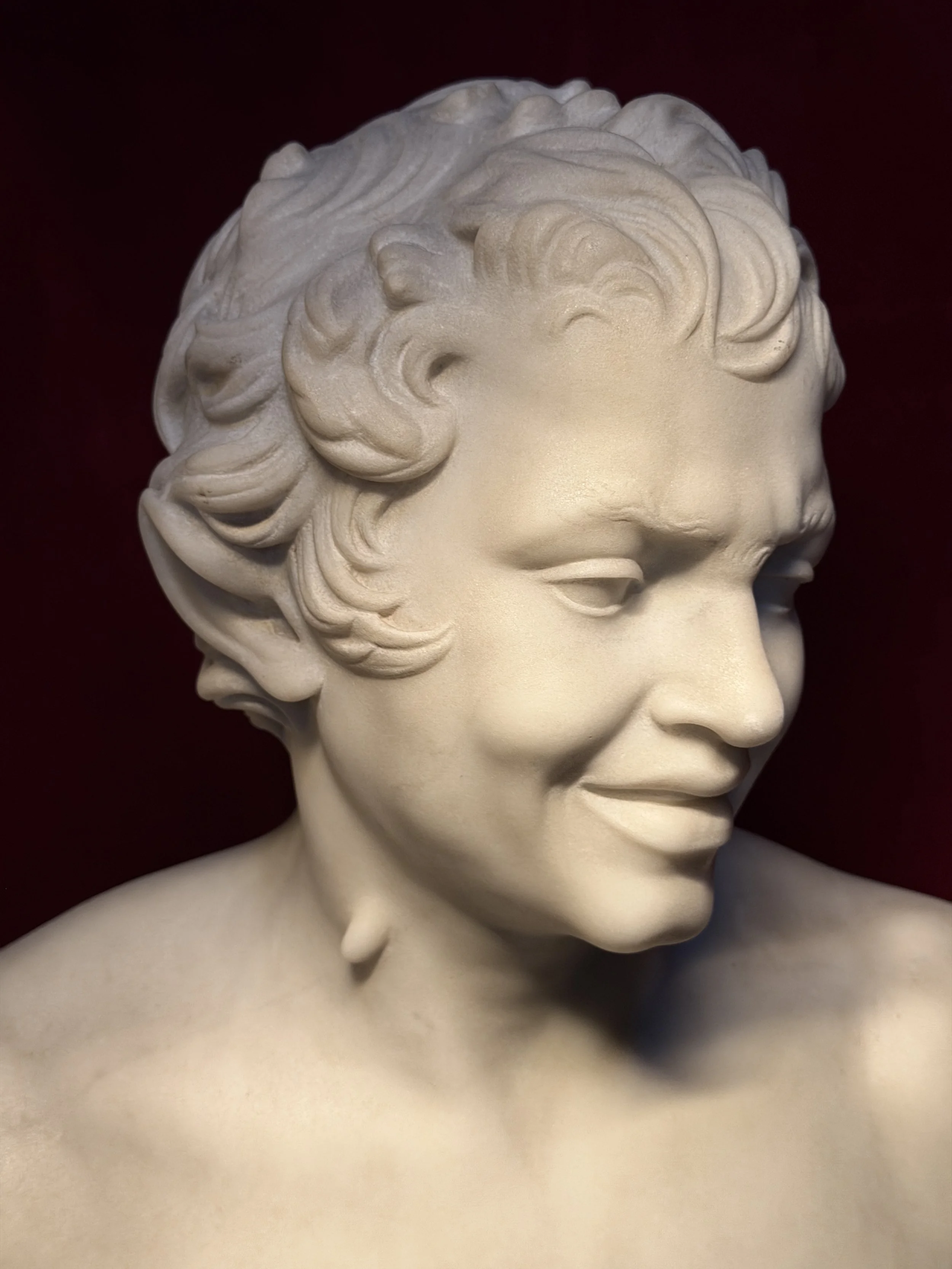
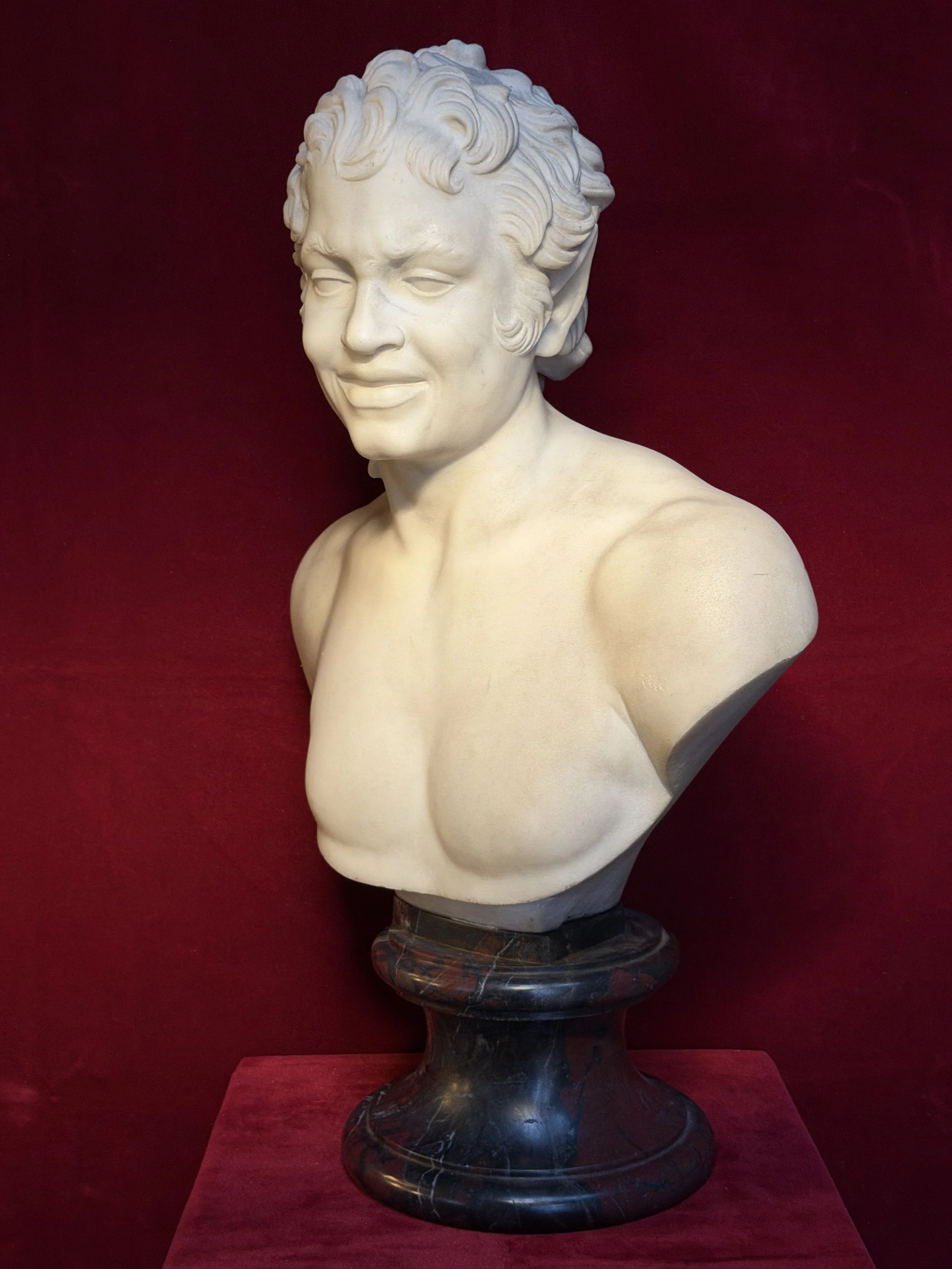
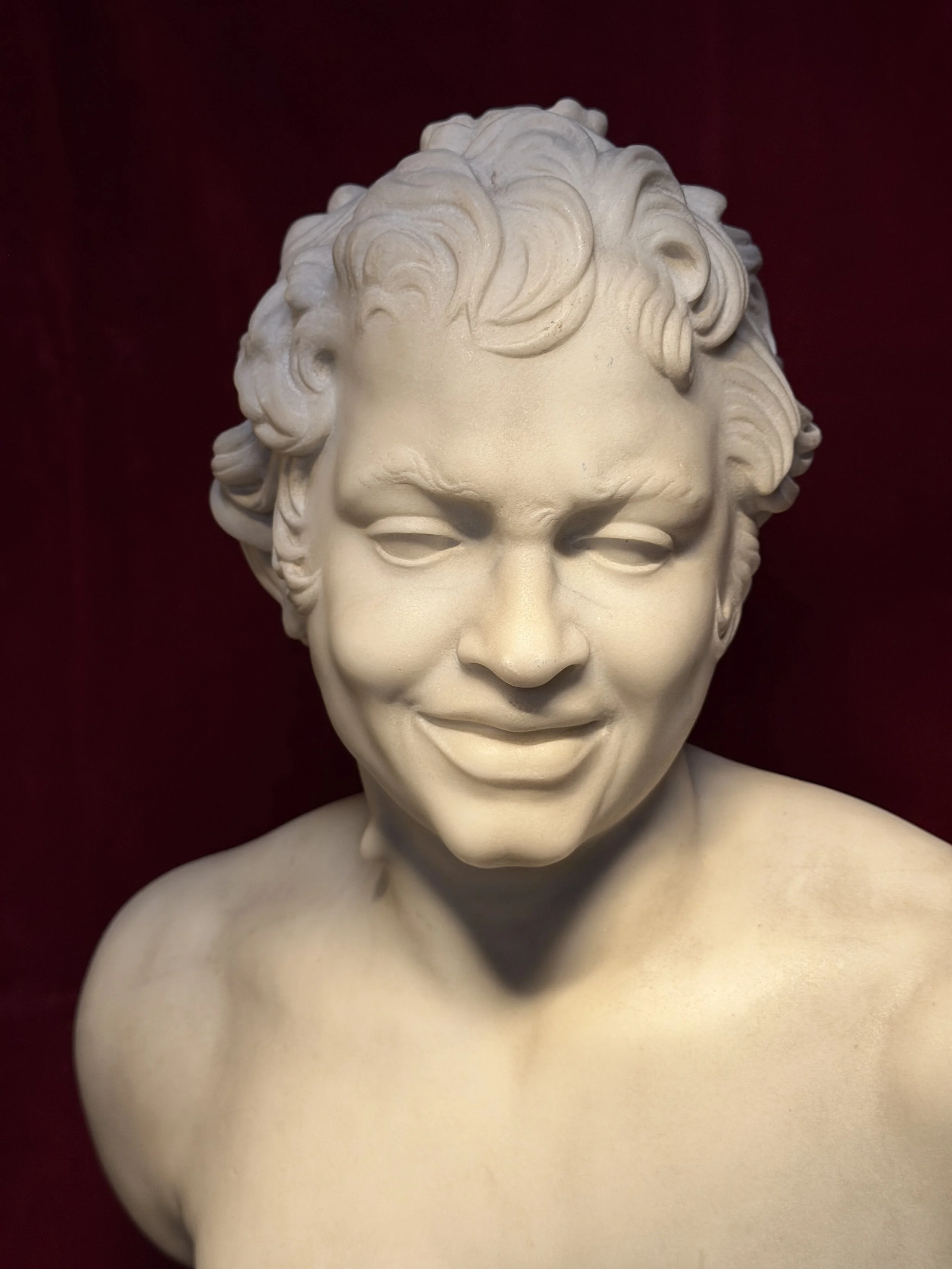
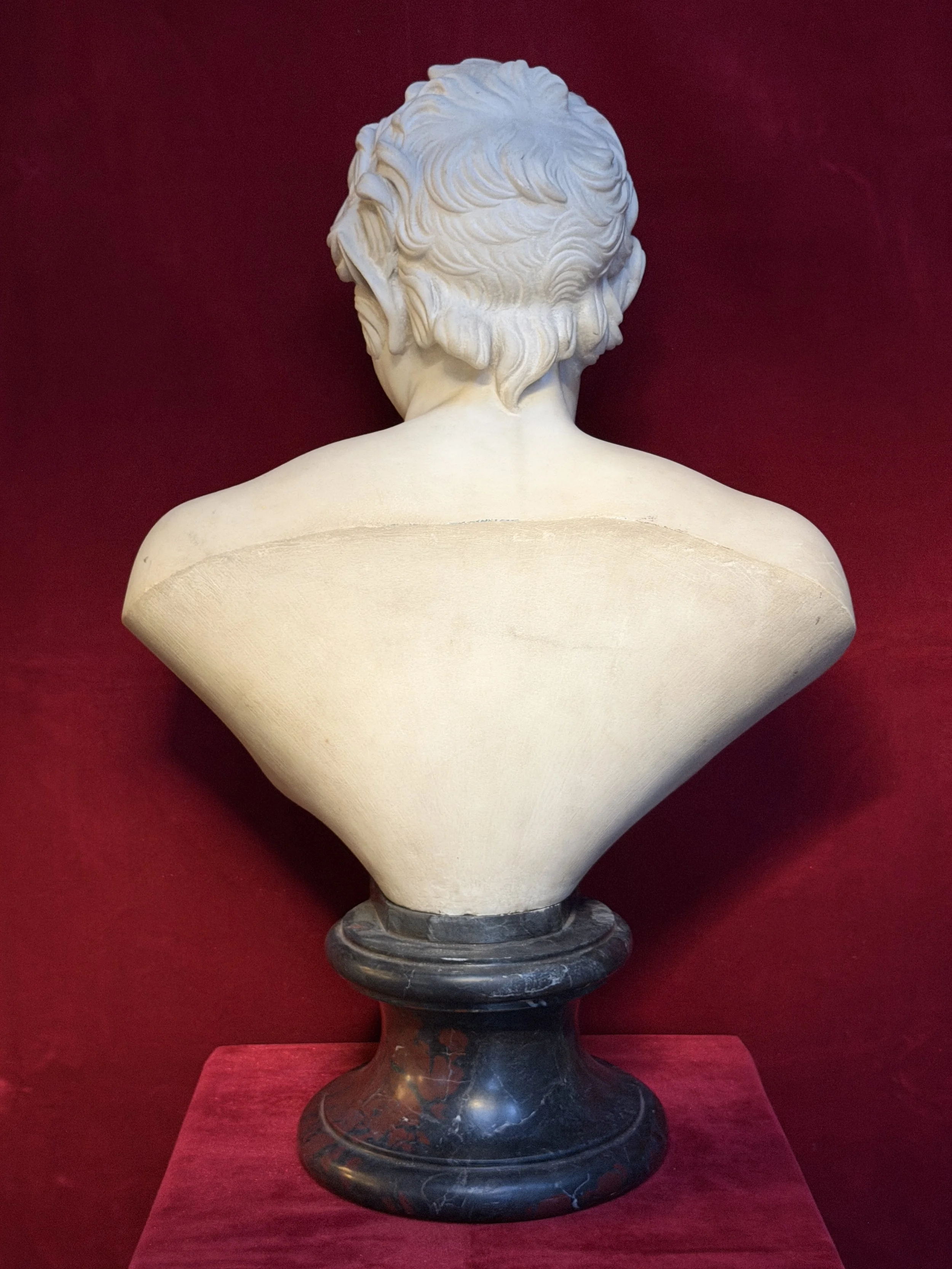
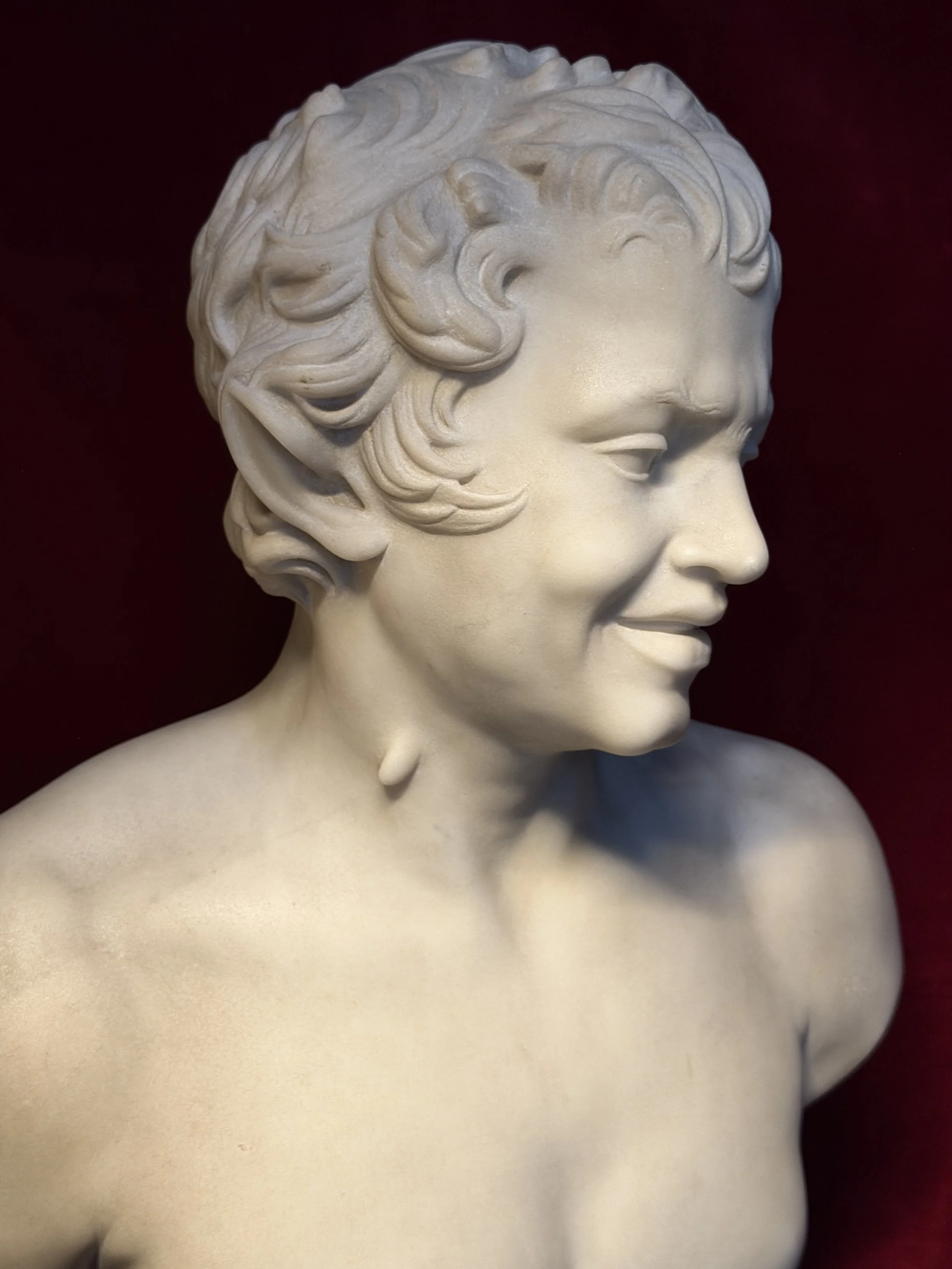
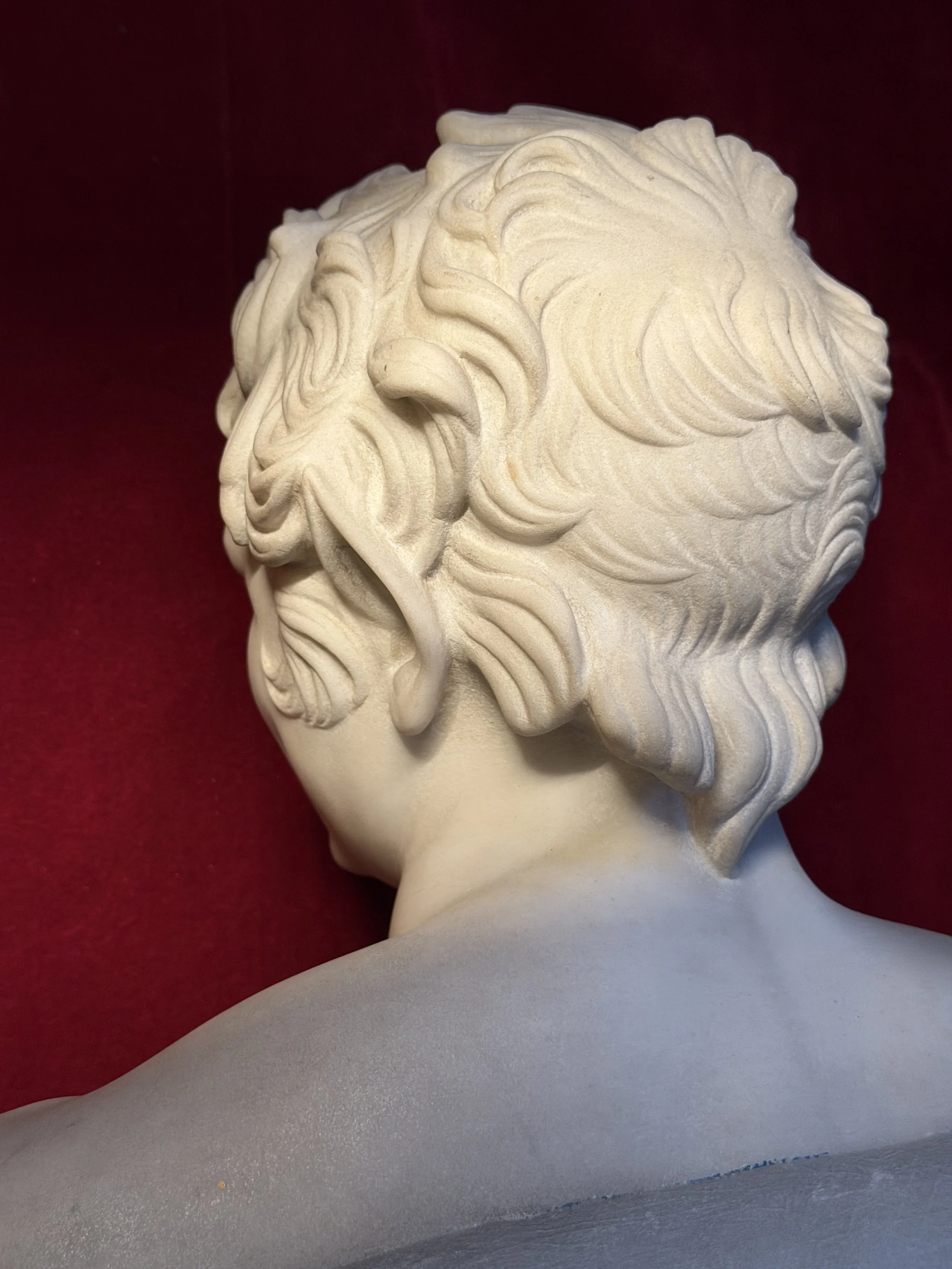
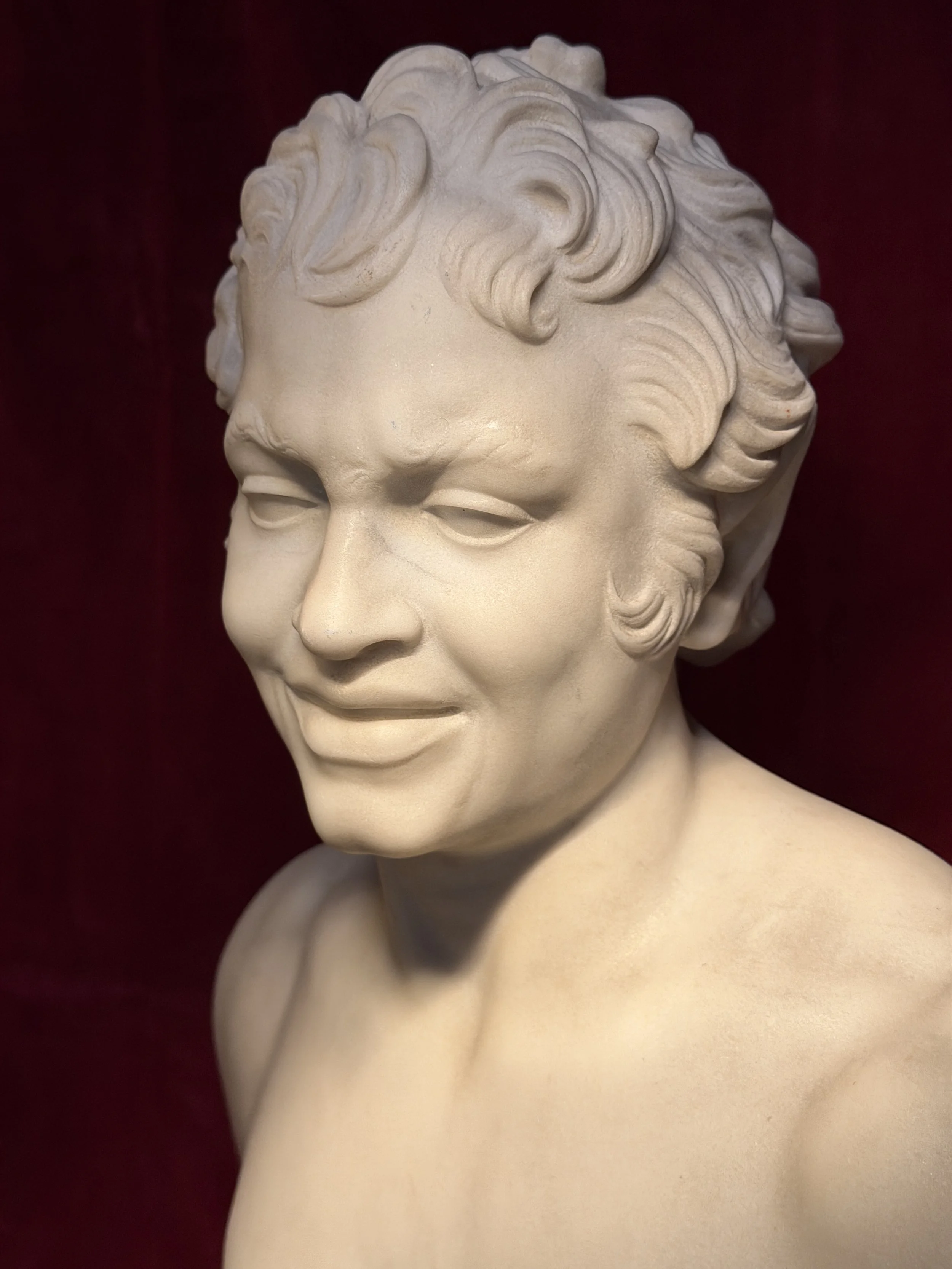
A late 19th Century Italian carved marble bust, after the 'Albani Faun' classical Roman sculpture.

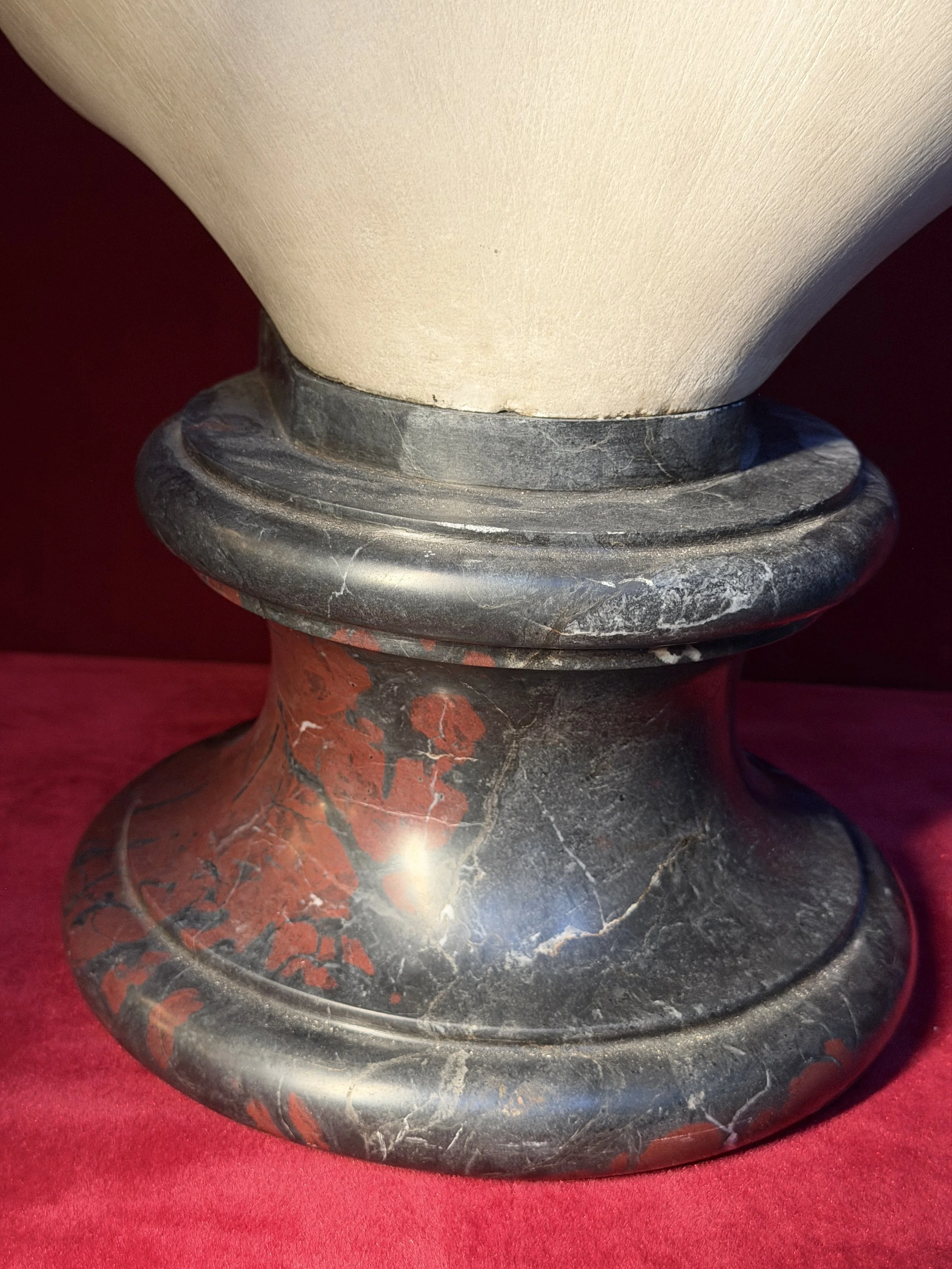
High quality bust in Carrara marble with socle base in dark grey & red veined marble.

Very impressive and theatrical decorative sculpture.

Provenance: French Art Market

H: 64cm / W: 38cm / 20cm.

The 'Albani Faun', also sometimes referred to as the 'Laughing Faun', is a Roman marble dating to circa 100 BC, which resides today in the Munich Glyptothek. The work was previously part of the prestigious collection of antiquities at the Villa Albani in Rome. The Villa Albani, known today as the Villa Albani Torlonia, was built in the mid-18th century for Cardinal Alessandro Albani (1692-1779), nephew of Pope Clement XI (1649-1721), to house his collection of antiquities, curated by 'the father of art history' J.J. Winckelmann (1717-1768). As soon as the villa was completed in 1763, Cardinal Albani welcomed cultivated visitors to admire the collection, which immediately became a highlight for British aristocrats on the Grand Tour. The Albani Faun was reproduced by 19th Century sculptors and such marble busts were extremely popular amongst Grand Tourists visiting Italy. 

In 1797, following the invasion of the Papal States, the faun is believed to have been part of the haul of Roman antiquities taken from Rome to Paris by Napoleon's army. Following Napoleon's final defeat at Waterloo in 1815, the famed sculptor Antonio Canova (1757-1822), was dispatched to Paris by Pope Pius VII (1742-1823) with the task of negotiating the repatriation of the stolen artwork. Canova was successful and much of the booty was returned to its original owners, however some treasures remained in Paris because the costs of transporting them home were too high. One such work was the Albani Faun, which was never returned to the Albani family, and was subsequently sold in Paris to Crown Prince Ludwig of Bavaria (1786-1868), with whom it travelled to Munich, where it remains to this day. 

The present marble bust, an Italian antique reproduction after the classical original, depicts the young Faun with his head turned slightly to the left and looking down, with a bare chest and shoulders. The iconic faun, a sylvan demigod from Classical mythology, can be recognised by his goat's horns and grin. 

A late 19th Century Italian carved marble bust, after the 'Albani Faun' classical Roman sculpture.

High quality bust in Carrara marble with socle base in dark grey & red veined marble.

Very impressive and theatrical decorative sculpture.

Provenance: French Art Market

H: 64cm / W: 38cm / 20cm.

The 'Albani Faun', also sometimes referred to as the 'Laughing Faun', is a Roman marble dating to circa 100 BC, which resides today in the Munich Glyptothek. The work was previously part of the prestigious collection of antiquities at the Villa Albani in Rome. The Villa Albani, known today as the Villa Albani Torlonia, was built in the mid-18th century for Cardinal Alessandro Albani (1692-1779), nephew of Pope Clement XI (1649-1721), to house his collection of antiquities, curated by 'the father of art history' J.J. Winckelmann (1717-1768). As soon as the villa was completed in 1763, Cardinal Albani welcomed cultivated visitors to admire the collection, which immediately became a highlight for British aristocrats on the Grand Tour. The Albani Faun was reproduced by 19th Century sculptors and such marble busts were extremely popular amongst Grand Tourists visiting Italy. 

In 1797, following the invasion of the Papal States, the faun is believed to have been part of the haul of Roman antiquities taken from Rome to Paris by Napoleon's army. Following Napoleon's final defeat at Waterloo in 1815, the famed sculptor Antonio Canova (1757-1822), was dispatched to Paris by Pope Pius VII (1742-1823) with the task of negotiating the repatriation of the stolen artwork. Canova was successful and much of the booty was returned to its original owners, however some treasures remained in Paris because the costs of transporting them home were too high. One such work was the Albani Faun, which was never returned to the Albani family, and was subsequently sold in Paris to Crown Prince Ludwig of Bavaria (1786-1868), with whom it travelled to Munich, where it remains to this day. 

The present marble bust, an Italian antique reproduction after the classical original, depicts the young Faun with his head turned slightly to the left and looking down, with a bare chest and shoulders. The iconic faun, a sylvan demigod from Classical mythology, can be recognised by his goat's horns and grin. 

SHIPPING:

Purchase price does not include shipping. All items are shipped fully insured from our London SE18 address. Or collection is possible most days by appointment.

We will package small to medium items for shipping, or box or wrap larger items sent by courier, at no charge. If a larger item requires to be sent in a crate that will be part of the shipping cost. 

Customer to pay for shipping / courier & insurance after purchase - cost depends on item and destination. 

The customer will also have to pay any import taxes & duties directly to the authority depending on the destination countries policy. 

Small to medium items that aren't fragile can be sent via Fedex to UK, EU and Rest of World. We would recommend sending any larger fragile or large items by courier vans to UK addresses. We have also used reliable and affordable couriers for such items to West & Central EU. Large and fragile items can also be sent crated via shipping companies.

We can offer advice and a close estimated quote in advance of purchase, and advise on the most cost effective but safe options..

We can also advise on import VAT charges to the EU (antiques and works of art over 100 years old are charged at a lower % tax to EU countries, usually around 5.5%). 

As of late 2025 the USA now charges a 10% tarif, despite antiques of over 100 years old having zero tarif-line duty. Tarifs will also vary depending on an items country of manufacture. There may also be a US customs processing & clearance fee. We will work with you to provide the correct commodity code and paperwork to minimise any such tarif/fees as much as possible.

Most items are antique and fragile and some wear should be expected. Condition will be accurately reported in item descriptions 

Items are honestly & accurately described with clear photos. All sales are final, with no returns (unless misrepresented in the listing - any issues to be confirmed within one week of delivery).

Please email with any questions.